 ErgoRated
Steelcase Gesture Chair Review — A highly-engineered ergonomic marvel that looks great on paper but reveals polarizing comfort and durability flaws after years of real-world use
⚡ TL;DR
If you are tall and frequently shift between typing and looking at your phone, the Gesture's highly articulated armrests and seat depth adjustments are top-tier. However, a notoriously thin seat pad, questionable long-term durability (especially the headrest), and a divisive lumb
◈ Verdict: Depends on Use Case
Pros
- +Class-leading, highly adjustable 3D armrests that are perfect for multi-device use
- +Intuitive and seamless seat depth adjustment knob that leaves no gap
- +Aesthetically pleasing, high-end design
- +Accommodates taller users very well
- +Simple and intuitive controls that are easy for flex-office workers to figure out
Cons
- −Flimsy headrest that is prone to losing its position or breaking off entirely
- −Thin seat pad that can cause tailbone pain during long sitting sessions
- −Extremely heavy frame that makes unboxing and moving difficult
- −Prone to squeaking, popping, and creaking after long-term use
- −Uncomfortable and poorly fitted for shorter users under 5'6'
Alex Rivera
Published May 2, 2026
$1259–$1999
Price may vary. Updated regularly.
Steelcase's $1,300 flagship chair boasts the best armrests in the business, but long-term users are reporting tailbone pain and snapping headrests. It’s a narrative arc we’ve seen before: a highly engineered ergonomic marvel that looks great on paper but reveals polarizing comfort and durability flaws after years of real-world use.
What you're actually getting
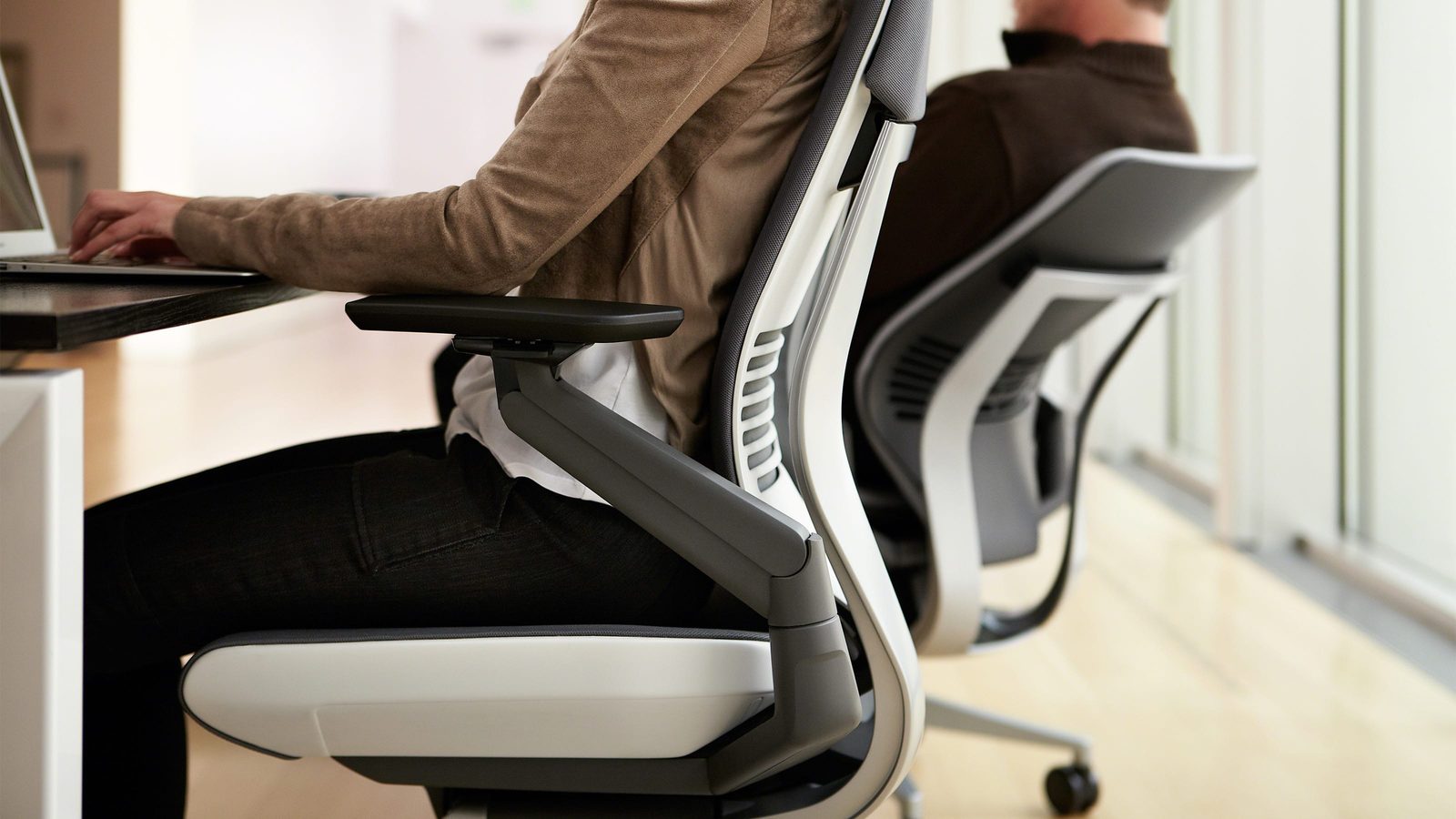
Let's cut to the chase: the Steelcase Gesture is a premium office chair with a premium price tag, often hovering around $1,300 fully loaded. It’s designed for the modern, multi-device workspace, and its standout feature is undoubtedly the 3D armrests. These aren't your typical up-and-down affairs; they articulate in every direction, allowing you to comfortably rest your arms while typing on a keyboard, scrolling on a tablet, or even holding a phone. As BTODtv noted after three years of daily use, "I feel like the Gesture's arms are in constant motion while using this chair versus a more static position." This level of adjustability is genuinely class-leading and a godsend for anyone who juggles multiple screens and devices.
The seat depth adjustment is another highlight, praised by Ahnestly for its intuitive knob and seamless operation that "leaves no gap." This is crucial for proper thigh support, especially for taller individuals. Speaking of height, the Gesture generally accommodates taller users very well, with Ahnestly recommending it for those 5'9" and above. The overall aesthetic is undeniably high-end, fitting perfectly into a modern, executive office. Olivier Girard even pointed out its tolerance for not being perfectly adjusted, making it a solid choice for flex-office environments where users might not take the time to dial in every setting.
However, the Gesture isn't without its significant drawbacks, and these become more apparent with extended, real-world use. The most contentious point is the lumbar support. While some find it perfectly adequate, others, like Ahnestly, describe it as "painfully aggressive and forced." This stark disagreement, even among experts, suggests the lumbar curve is highly subjective and might not work for everyone. Compounding this is the seat pad itself. Despite the chair's hefty price, multiple reviewers, including BTODtv, have reported tailbone pain due to what they describe as a thin seat pad with an intentional cutout design. This is a serious concern for anyone spending 8+ hours a day in the chair.
Then there's the durability. The headrest, in particular, has been a recurring point of failure. Reviewers mention it being flimsy, prone to losing its position, or even breaking off entirely. This is unacceptable for a chair at this price point. Add to this the fact that the chair is notoriously heavy, making unboxing and moving a chore, and the occasional squeaking, popping, and creaking that can develop over time, and you start to question if the premium materials and design are truly built to last. As JayzTwoCents bluntly put it after a long-term test, "I have never regretted buying a product more than this one."
Performance — what reviewers actually measured
| Metric | Value | Context |
|---|---|---|
| Fully loaded price | ~$1330 | The cost of a top-tier configuration. |
| Ideal user height | 5'9" and above | Where the chair's ergonomics tend to shine. |
| Minimum user height | ~5'3" | Shorter users may struggle with fit and comfort. |
| Desk time tested | 10-12 hrs/day | Real-world, extended use reveals long-term comfort and durability. |
Where it actually wins
The Steelcase Gesture’s undisputed champion feature is its armrests. They are a marvel of engineering, offering an unparalleled range of motion that adapts to your every posture and device. Whether you’re typing furiously, leaning back to ponder, or holding a phone to your ear, these arms provide consistent, comfortable support. This adaptability is a game-changer for multi-device users, reducing strain and promoting better posture throughout the day.
Beyond the arms, the Gesture excels in its intuitive design and high-end aesthetics. The controls are generally easy to understand and operate, making it a practical choice for shared or flex-office spaces where users might not have time for a deep dive into ergonomics. The seat depth adjustment is another win, offering smooth, gap-free customization that’s vital for proper leg support. And for taller individuals, the chair provides ample room and support, fitting like a glove where many other chairs fall short.
Where it falls short
The most glaring weakness of the Gesture is its polarizing lumbar support and the thin, potentially painful seat cushion. The aggressive lumbar curve simply doesn't work for everyone, and the discomfort reported by some users, even after extended testing, is a serious red flag. Coupled with a seat pad that can lead to tailbone pain, this chair fails a fundamental test of ergonomic comfort for a significant portion of its potential user base.
Durability is another major concern. The flimsy headrest is a known weak point, prone to breaking or losing its position, which is frankly unacceptable on a chair costing over a thousand dollars. The overall weight of the chair, while indicative of a robust frame, makes it a beast to move, and the long-term issue of squeaking and creaking can detract from the premium experience. For a chair positioned as a long-term investment, these durability concerns are hard to overlook.
Should you buy it?
The Steelcase Gesture is a chair that demands careful consideration, especially given its price. It’s a prime example of a product where personal testing is not just recommended, but absolutely essential.
Buy if you
- Are a taller individual (5'9" and above) who struggles to find chairs that fit comfortably.
- Frequently use multiple devices (laptop, tablet, phone) and need highly adaptable armrest support.
- Appreciate a sleek, modern aesthetic and intuitive, easy-to-use controls.
- Are looking for a chair that tolerates less-than-perfect adjustment for shared or flex-office environments.
Skip if you
- Are shorter than 5'6" and concerned about proper fit and comfort.
- Require a plush, thick seat cushion and are prone to tailbone pain.
- Are sensitive to lumbar support variations and prefer a softer, less aggressive curve.
- Have had durability issues with chairs in the past and are looking for a worry-free, long-term investment.
The Steelcase Gesture offers unmatched armrest adjustability but suffers from polarizing lumbar support and durability issues that make its premium price tag hard to swallow.
Sources consulted
- JayzTwoCents — I have never regreted buying a product more than this one... Long Term User Report
- Ahnestly — Steelcase Gesture - The Best Chair for Tall People
- BTODtv — Steelcase Gesture Review: My Opinion 3 Years Later
- Olivier Girard - the Posture Guy — Steelcase Gesture Adjustments - Independent Review By An Ergonomics Expert
Synthesis combines independent reviews above. Verdicts and quotes attributed to original creators. Affiliate disclosure: we may earn a commission from qualifying purchases via Amazon links.
Products covered in this review
Frequently Asked Questions
Is the Steelcase Gesture Chair worth buying?
If you are tall and frequently shift between typing and looking at your phone, the Gesture's highly articulated armrests and seat depth adjustments are top-tier. However, a notoriously thin seat pad, questionable long-term durability (especially the headrest), and a divisive lumbar curve mean you absolutely must test it before spending over $1,300.
Who is the Steelcase Gesture Chair best for?
Tall users (5'9'+) who use multiple devices throughout the day and need highly articulated armrests.
Who should skip it?
Shorter users (under 5'6'), heavy-set users prone to breaking chairs, and anyone who needs a thick, plush seat cushion.